The World’s Grain Stocks Are Not Your Warehouse
A global grain surplus looks excellent in a presentation. Your factory would prefer the grain in its own warehouse. Holding a physical inventory and protecting against falling prices can work together: securing material for production while managing the risk of buying before the next price drop. Because having the grain and protecting its value belong in the same conversation.
A global grain stockpile is reassuring. Grain already inside your own warehouse is considerably more useful when production starts on Monday.
On November 10, USDA raised its forecast for 2026/27 world wheat ending stocks by 4.8 million ton, while cutting expected Russian and Ukrainian exports by 1 million ton each amid Black Sea disruption. More grain on the balance sheet does not necessarily mean easier delivery.
For manufacturers facing unreliable deliveries, that strengthens the case for a simple combination: buy the inventory needed for a defined production period, bring it into your own warehouse, and protect its value against falling prices.
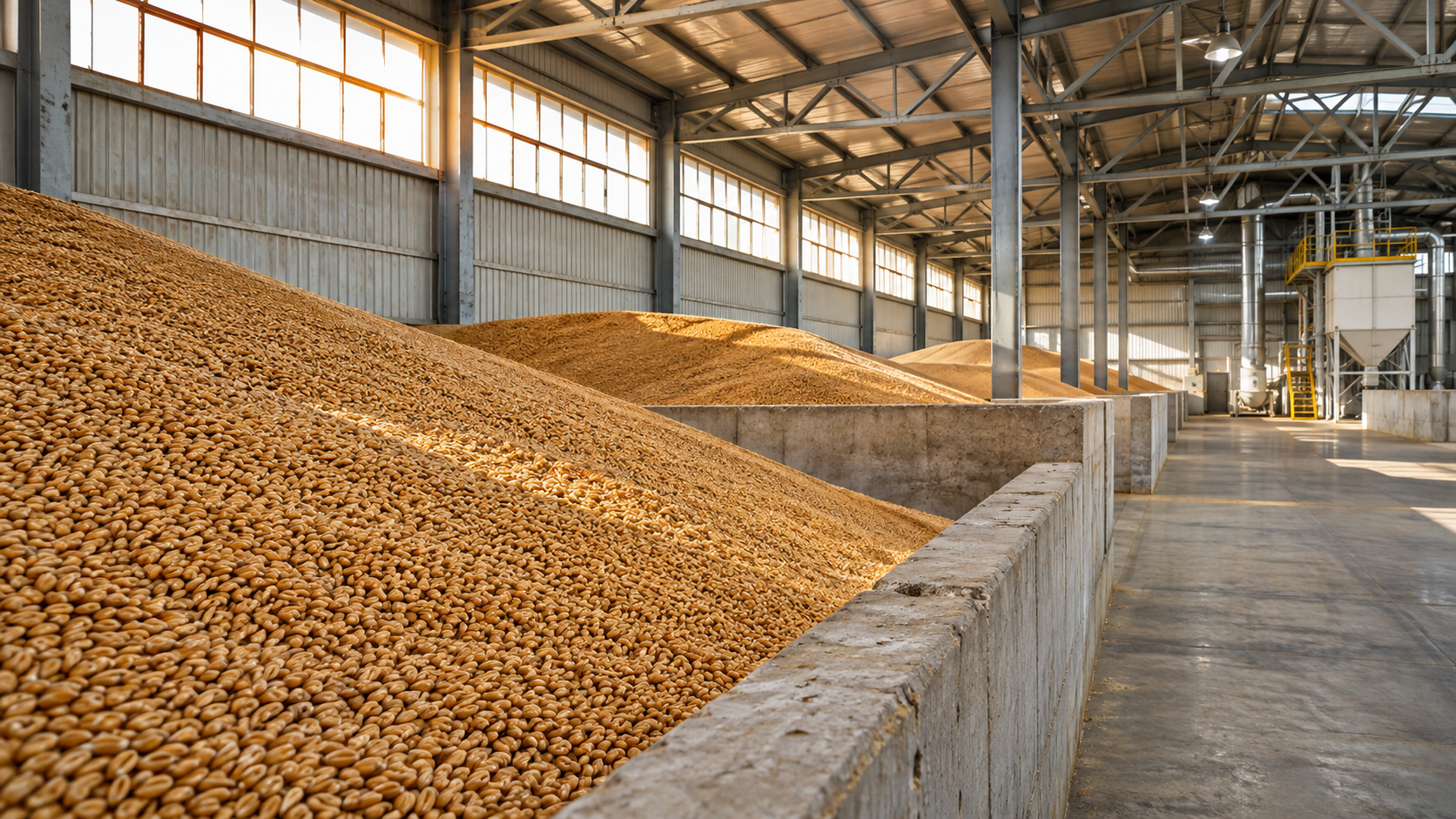
But what if prices keep falling? Buying early could leave the business holding expensive ingredients while competitors replenish more cheaply. That is precisely where downside hedging earns its place.
Once the grain is really owned, purchased put options can protect against declines below a chosen benchmark price over a specified period. The protection can help offset the fall in inventory value while the physical stock remains available for production.
Consider a hypothetical flour mill that brings eight weeks of wheat into its own silos. It protects the inventory backing flour sales that have not yet been priced. If wheat falls and customers seek cheaper flour, the hedge can help offset the commercial disadvantage of holding higher-cost wheat. If deliveries elsewhere are disrupted, the mill already has its raw material and can even raise its selling prices.
The combination addresses both concerns: physical stock covers the planned production requirement, while the hedge limits the covered price downside. The manufacturer can secure supply without leaving the entire value of that stock exposed to the next sell-off and maximize his business flexibility.
Size and update the hedge as inventory is consumed and sales are priced. Stock already covering firm, fixed-price customer orders may have its commercial margin secured; that matters when deciding how much additional protection is useful.
A ton in your own warehouse has one advantage over a global surplus: you own it. With appropriate downside protection, owning it need not amount to an unprotected bet on higher prices.
The information provided in this market insight is for general informational purposes and should not be considered financial advice. It is not intended to offer any financial recommendations or endorsements. Any decisions made based on the content are the sole responsibility of the reader.
Join the conversation on LinkedIn:read and comment on this article ↗